The Donner EM1 review is most relevant to musicians who need a personal headphone or in-ear monitor feed in a compact, rechargeable belt-pack format.
Its XLR and TRS inputs, stereo/mono switching, and onboard volume control make it a practical option for compatible monitoring setups.
Donner EM1 Review Summary
The quick verdict
800+ ratings
Read Amazon ReviewsDonner EM1
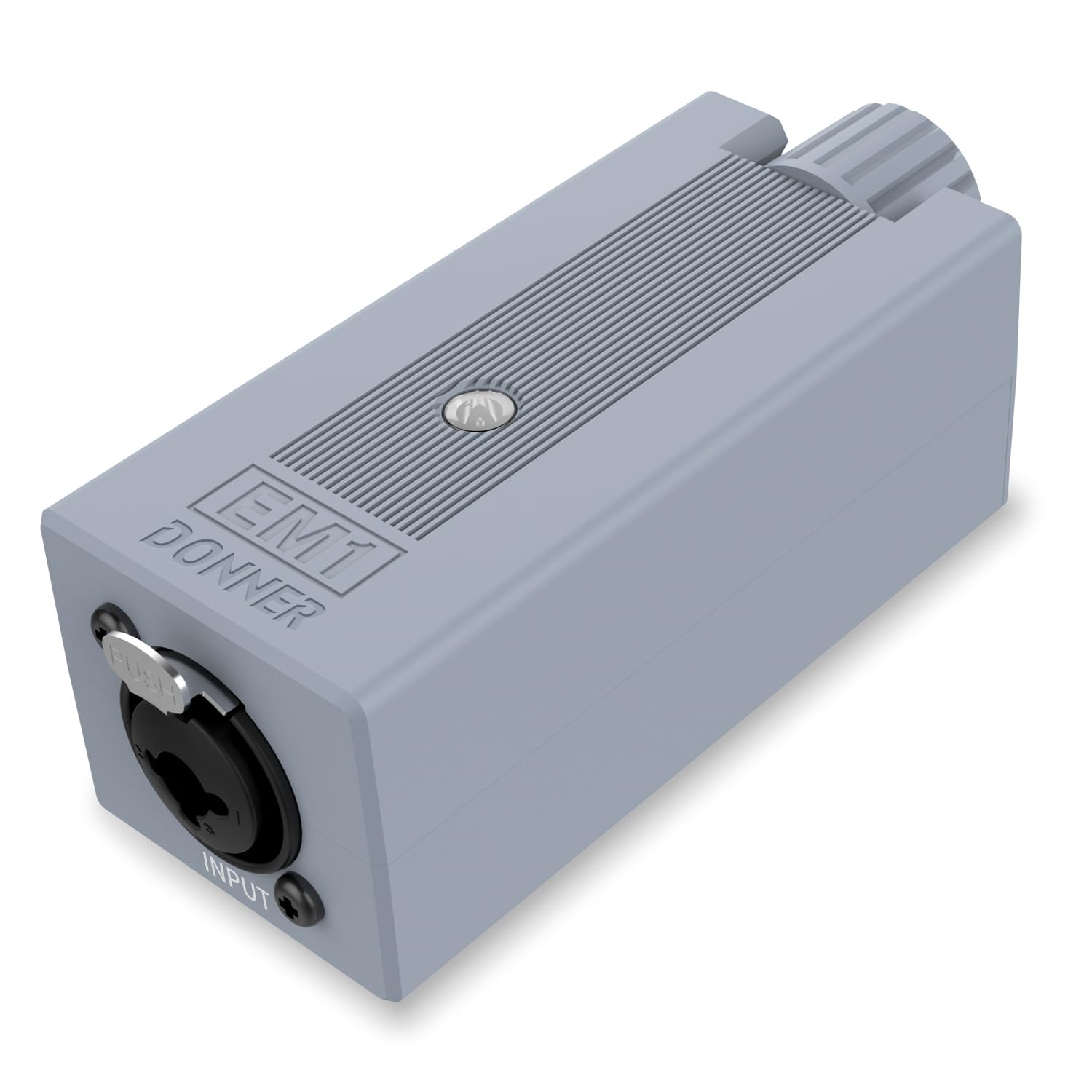
A compact rechargeable monitor amplifier for musicians who need a belt-pack headphone feed with XLR or TRS input and personal volume control.
- High-power headphone amplification is intended to provide volume for professional, high-impedance headphones, including in noisy surroundings.
- XLR and TRS input connectors include locking mechanisms for a more secure cable connection.
- A stereo/mono source switch lets the user select a mode based on the connected cable and source arrangement.
- A 3.5 mm output connects to compatible headphones or in-ear monitors.

Pros
- Includes both XLR and TRS input options for common wired monitor feeds.
- Provides onboard headphone volume control in a portable belt-pack design.
Consider before buying
- Microphones are not supported, so this is not a microphone input or preamp solution.
- The up-to-12-hour battery figure is a maximum; plan charging around the length and demands of your sessions.
Read the full review summary
The EM1 combines a focused set of stage-monitoring essentials: a high-power headphone amplifier, XLR and TRS input connections with locking mechanisms, a stereo/mono source switch, and a 3.5 mm output.
The metal belt clip and rechargeable battery make the design convenient to carry, while the stated battery life of up to 12 hours gives buyers a useful planning reference rather than a guaranteed runtime.
It suits performers who already have a compatible wired monitor source and want to control their own headphone level without carrying a larger amplifier.
It does not support microphones, so it should be treated as a headphone amp receiving a monitor feed, not as a microphone preamp or all-in-one personal mixer.
Buyers should also confirm that the source connection and stereo or mono signal arrangement match their setup.
The buying factors
Donner EM1 Scorecard
Editorial scores reflect listed features and buyer fit; they are not laboratory measurements or customer ratings.
Connection flexibility
XLR and TRS input options accommodate common monitor-feed connections, with locking mechanisms described for the inputs.
Personal level control
The unit is designed for headphone listening with volume control, giving the performer an onboard way to adjust their own level.
Portability
A compact form and metallic belt-pack clip are well suited to carrying the amp during a performance.
Battery convenience
Rechargeable Li-ion power and an up-to-12-hour maximum are useful, though actual runtime can vary with use.
Monitoring versatility
A stereo/mono switch offers useful flexibility, but the intended role is a personal headphone feed rather than microphone handling.
Setup simplicity
Its core controls and input choices are straightforward, provided the buyer checks cable compatibility and signal format first.
Key Features and Specifications of Donner EM1
- High-power headphone amplification is intended to provide volume for professional, high-impedance headphones, including in noisy surroundings.
- XLR and TRS input connectors include locking mechanisms for a more secure cable connection.
- A stereo/mono source switch lets the user select a mode based on the connected cable and source arrangement.
- A 3.5 mm output connects to compatible headphones or in-ear monitors.
- The rechargeable Li-ion battery is rated for up to 12 hours of operation; power and charging status are shown by LED indicators.
- A metallic belt-pack clip and compact design support carrying the amp on a performer’s clothing or belt.
- The device does not support microphones, so it needs a suitable audio feed from another part of the setup.
Pros and Cons of Donner EM1
Pros
- Includes both XLR and TRS input options for common wired monitor feeds.
- Provides onboard headphone volume control in a portable belt-pack design.
- Offers stereo/mono switching for different source and cable configurations.
- Rechargeable operation and LED status indicators reduce reliance on disposable batteries.
Consider before buying
- Microphones are not supported, so this is not a microphone input or preamp solution.
- The up-to-12-hour battery figure is a maximum; plan charging around the length and demands of your sessions.
- Buyers need to confirm that their monitor source, cable, and stereo/mono configuration are compatible before relying on it in a performance setup.
Who Should Buy Donner EM1?
Good fit
Consider the Donner EM1 if you need a personal wired monitor amplifier that clips onto a belt and accepts an XLR or TRS feed.
The locking input design, 3.5 mm headphone output, and individual volume control cover the essential connections and adjustment points for a simple monitoring chain.
It is especially suitable when portability matters and the performer already receives a monitor signal from a mixer or other source. The stereo/mono switch adds flexibility, and rechargeable power can simplify regular use.
Check the intended signal path and headphone connection before buying, then allow time to recharge between demanding sessions rather than assuming the maximum runtime will apply in every case.
Who should skip it
Skip this model if you need to plug a microphone directly into the device; microphone support is outside its design.
Also look elsewhere if you need a mixer or a more extensive set of inputs and controls than a compact personal headphone amplifier provides.
How the Donner EM1 Fits a Personal Monitoring Setup
A focused role in the signal chain
The EM1 is designed to receive an existing audio feed and drive headphones or in-ear monitors, with the listener adjusting volume on the belt pack.
That division of work makes sense for performers who already have a monitor output available. Before choosing it, identify whether the source offers XLR or TRS and whether the cable carries the signal arrangement you intend to monitor.
Stereo and mono depend on the source
The stereo/mono switch is useful because monitoring setups do not all deliver audio in the same format. Its presence does not remove the need to match the switch setting and cable connection to the feed.
If you rely on a particular stereo image or a mono monitor mix, check your source and cable arrangement before a performance rather than discovering a mismatch on stage.
Power and portability for sessions
Rechargeable power, LED indicators, and a belt clip are practical details for a device meant to travel with a performer. The up-to-12-hour figure provides a ceiling for planning, but actual use can affect how long a charge lasts.
For long rehearsals or performances, charge the unit beforehand and consider how you will monitor its status between uses.
Headphone choice and level needs
The high-power design is intended to work with professional high-impedance headphones and help provide volume in noisy surroundings.
Since headphone sensitivity, source level, and listening conditions differ, buyers should confirm that their headphones and monitor feed suit the amp. The product’s role remains personal headphone amplification, not microphone input or broader signal processing.
Alternatives to Donner EM1
No alternative model is recommended here. Compare the design and features that matter to your monitoring routine before choosing another option.
Is Donner EM1 Worth It?
The Donner EM1 is worth considering for performers who want a compact, rechargeable personal headphone amplifier with XLR or TRS input, stereo/mono selection, and belt-pack portability.
Its controls and connection choices target a clear job: carrying a monitor feed to headphones with personal level adjustment.
Buy it when that focused setup matches your signal chain and you do not need microphone support. Confirm the input, cable, and stereo/mono requirements first, and plan charging with the stated maximum runtime in mind.
Your review at a glance
800+ ratings
Read Amazon ReviewsDonner EM1
A compact rechargeable monitor amplifier for musicians who need a belt-pack headphone feed with XLR or TRS input and personal volume control.
- High-power headphone amplification is intended to provide volume for professional, high-impedance headphones, including in noisy surroundings.
- XLR and TRS input connectors include locking mechanisms for a more secure cable connection.
- A stereo/mono source switch lets the user select a mode based on the connected cable and source arrangement.
- A 3.5 mm output connects to compatible headphones or in-ear monitors.